

7 Arab Artworks That Explore Faith and Spirituality for Ramadan
A curated selection of modern and contemporary Arab artworks exploring faith, sacred space, and the rituals that shape Ramadan

As we enter the holy month of Ramadan, attention turns inward. The pace of life slows as we take time to reflect. Across the Arab world, artists have long explored faith not only through overt religious imagery, but through ritual, memory, geometry, and the architecture of their environments.
From Sufi devotion to sacred cities, from cosmic order to communal gathering, these works offer distinct visual meditations on belief or the present recognisable elements and concepts connected to faith and Ramadan. Together, they reveal how spirituality in Arab art is not confined to the mosque or the page, but woven into movement, landscape, and the shared spaces that shape collective identity.
The Whirling Dervishes by Mahmoud Said, 1929
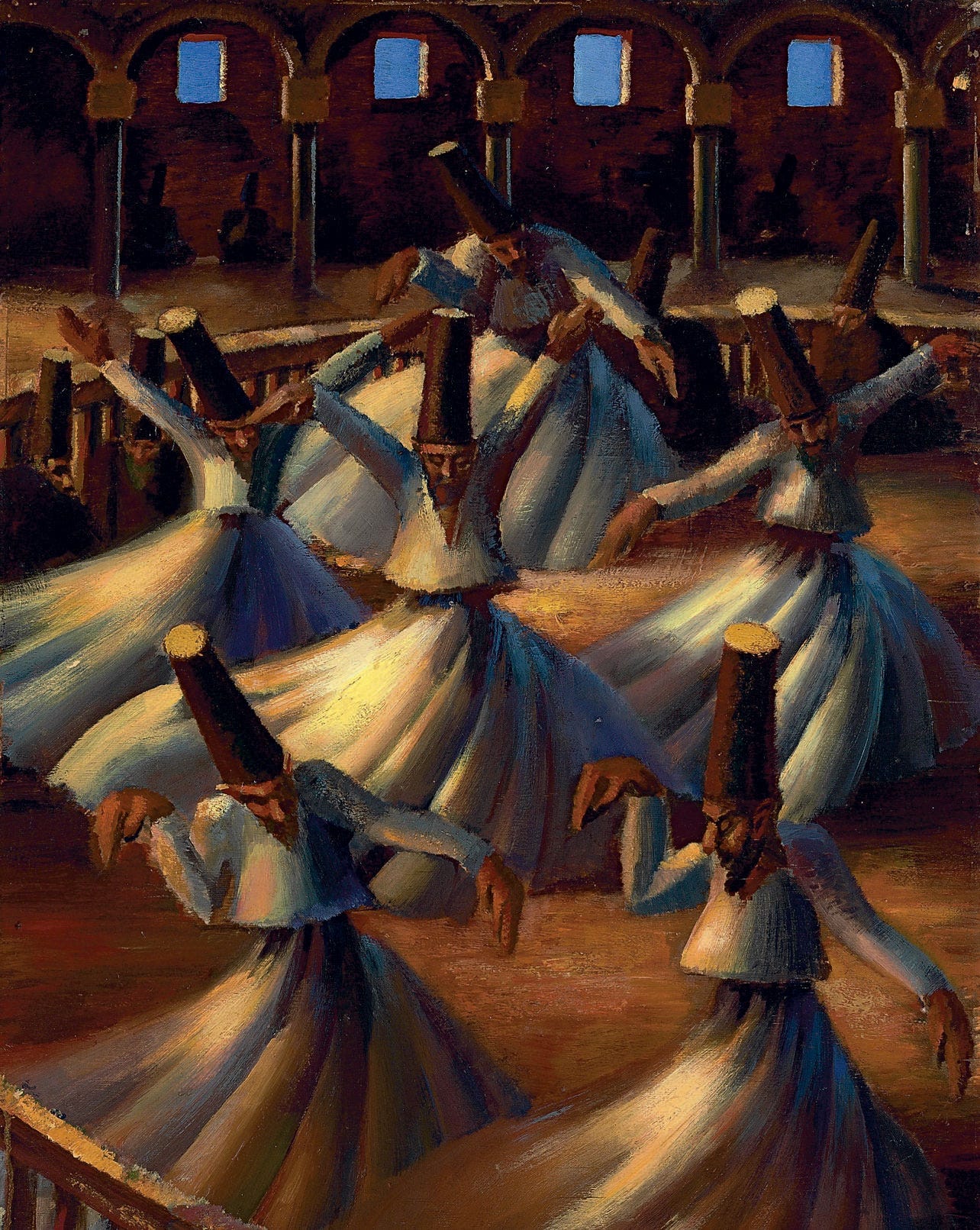
White-robed figures turn in measured rotation, their skirts expanding into near-perfect circles as they enter a state of devotional trance. Pioneering Egyptian artist Mahmoud Said’s painting is full of Earthy tones that anchor the composition while the figures feel solid, weighted and the same time as if they are about to float away. Through controlled movement and repetition, Said creates a composition that feels grounded and yet channels concepts of transcendence and devotion.
The Coiling of Day and Night by Ahmed Moustafa, 1989
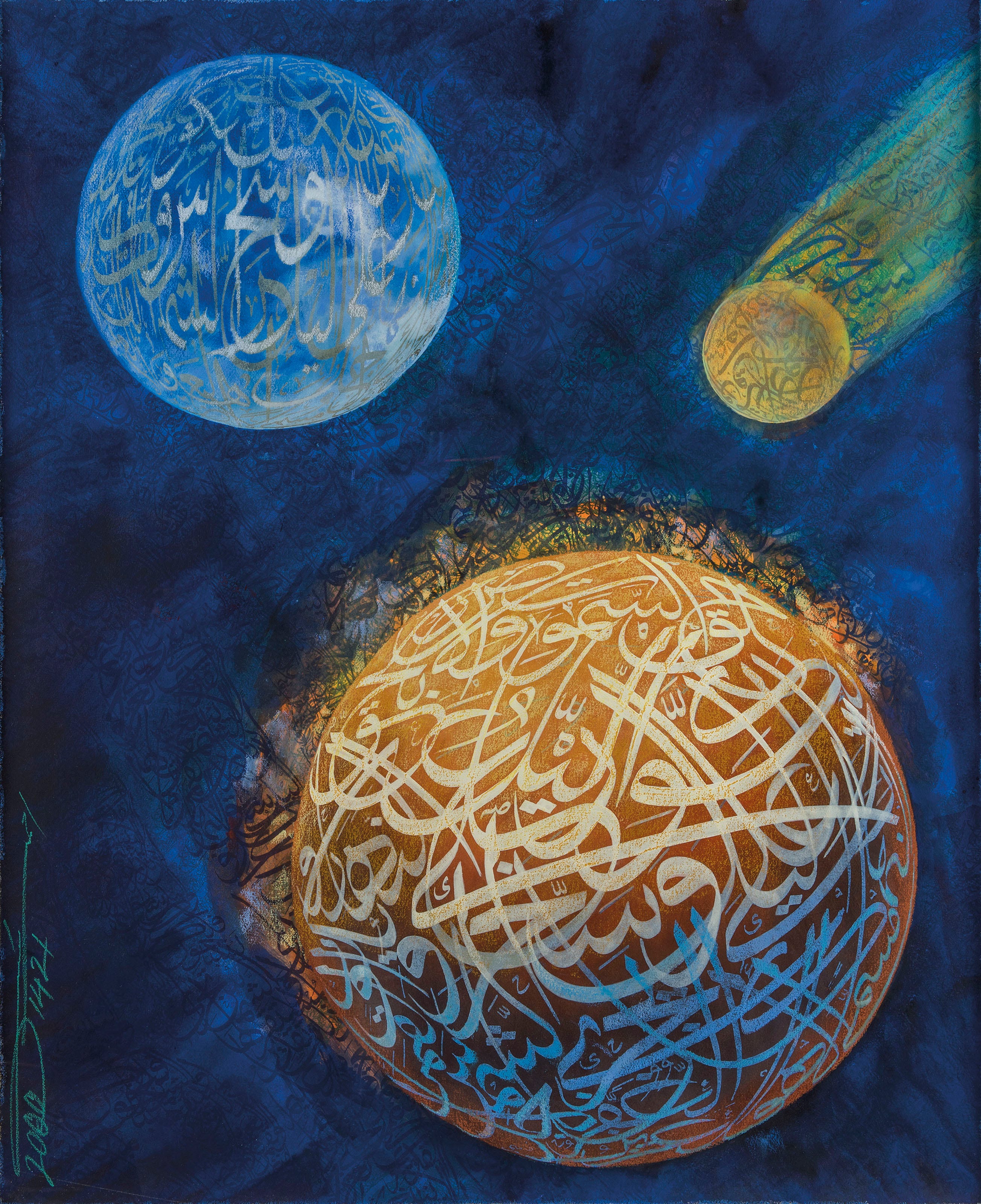
Planetary forms exist in an abstract cosmic space, suggesting celestial motion and the measured passage of time. For Egyptian artist Ahmed Moustafa known for his incredible calligraphy and Islamic inspired work, geometry act as more than a decorative element here but feels it is devotional. The composition draws on Qur’anic cosmology, where day, night, space, sky and all the elements are connected to one another through Islamic texts, rendered with detail through Moustafa’s careful and thoughtful hand. The painting reads as contemplation in visual form, a meditation on infinity, unity, and the divine architecture of the universe.
City of Peace (Jerusalem) by Laila Shawa, 1973
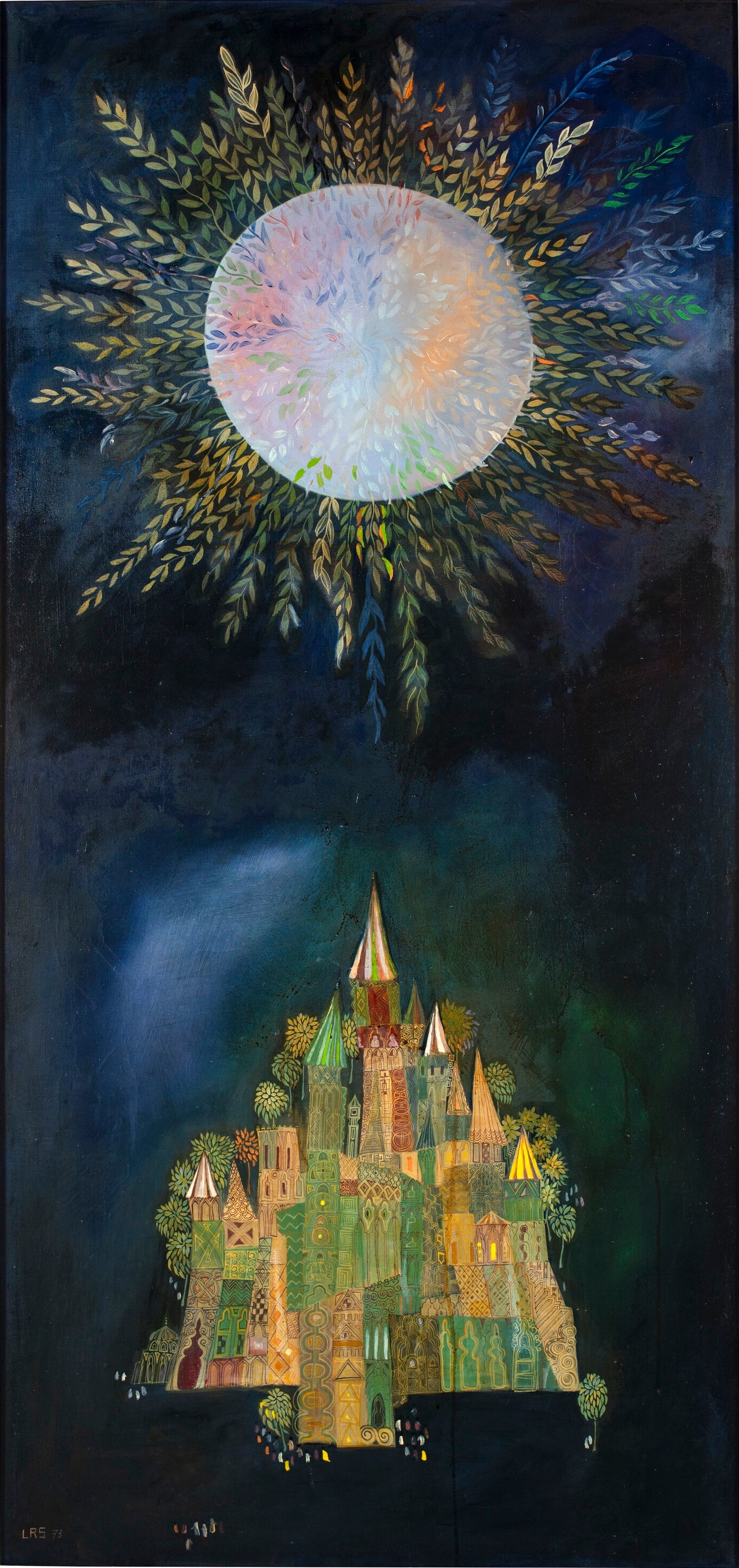
A stunning work by the Palestinian visual artist Laila Shawa. A luminous moon hangs over Jerusalem, its architecture rendered in deep, ethereal tones and stylised into a dreamlike cityscape. The perspective is flattened, the composition carefully structured, giving the scene a sense of stillness and suspended time. Rather than document the city, Shawa offers a symbolic portrait, sacred yet fragile. The work reflects a contemplative hope rooted in memory and belonging. Long before her later, sharper critiques of occupation, she imagined Jerusalem as a space of peace, asserting through art the right to identity, place, and return.
Untitled by Abdul Halim Radwi, 1986
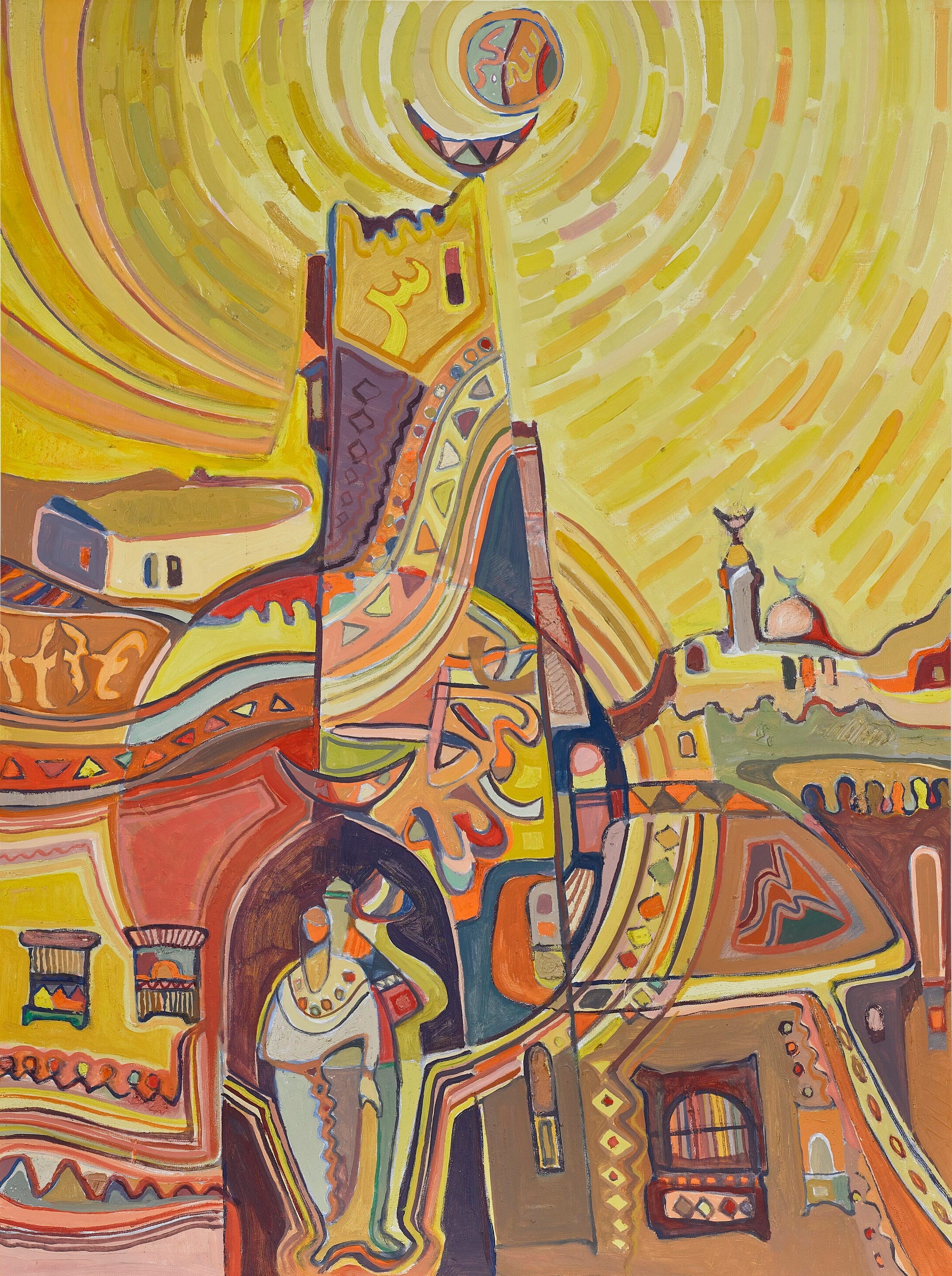
Clustered buildings rise in layered planes of colour, their forms hovering between abstraction and architecture. A sun and Crecent moon, either hang in the sky or are part of the architecture where hints of domes, archways, and tightly packed facades evoke the historic cities of the Hijaz. Light moves gently across textured surfaces, creating a quiet, almost devotional atmosphere. Saudi artist, Abdul Halim Radwi documents the emotional impact of a city where memory and spiritual resonance, where geometry and brushwork work together to suggest continuity, belonging, and the enduring presence of place.
Coffee Shop on Madina Road by Safeya Binzagr, 1968
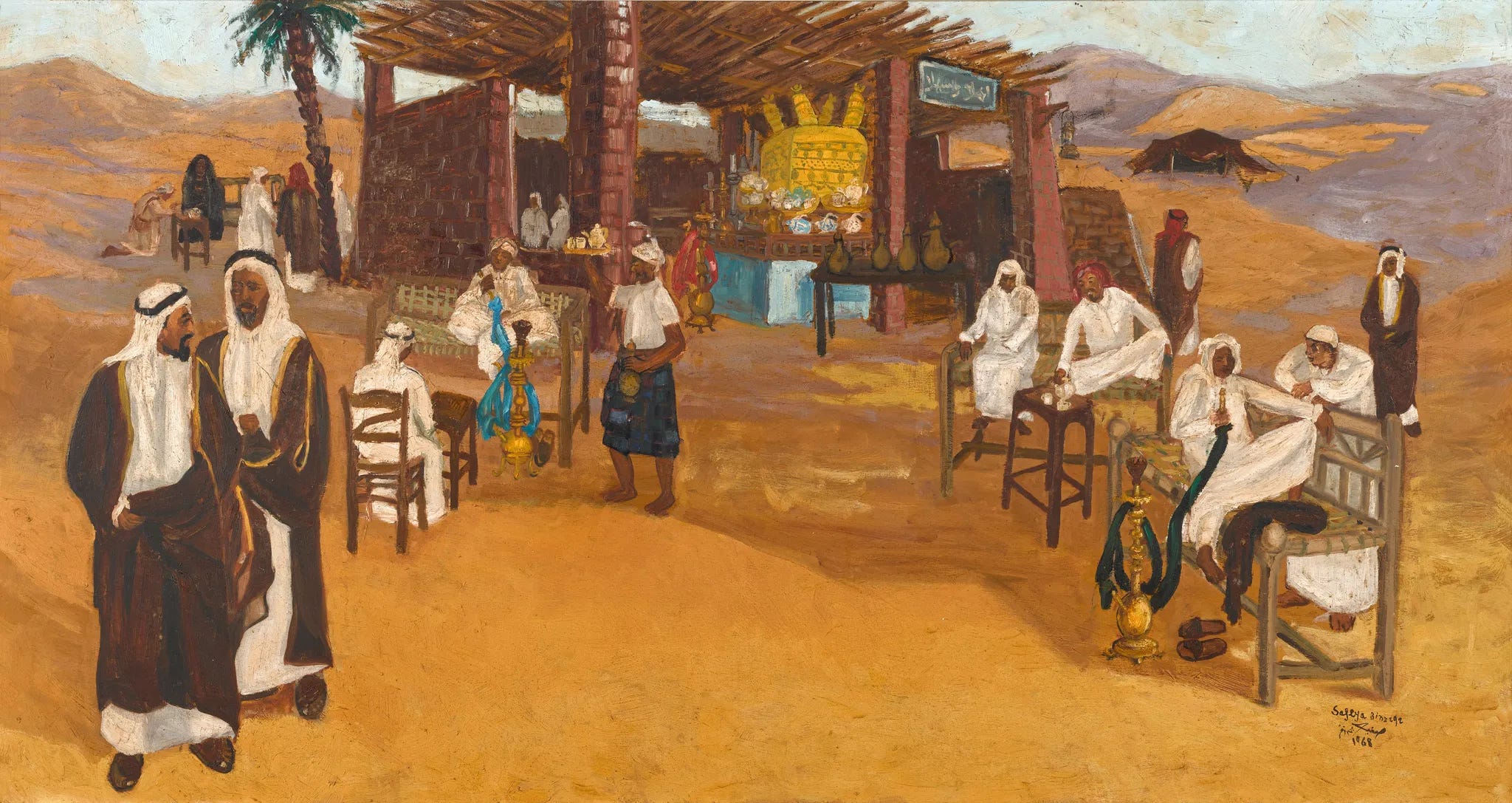
Men gather in a modest roadside café, seated closely, absorbed in conversation. Saudi artist Safeya Binzagr’s scene is intimate and observational, rendered with careful attention to dress, gesture, and interior detail. There is no overt religious imagery, but there is a sense of community infused in the work and atmosphere that feels so much like what the holy month is about – connecting families and people together through faith and hospitality which Binzagr depicts here existing seamlessly side by side.
Magnetism by Ahmed Mater, 2012
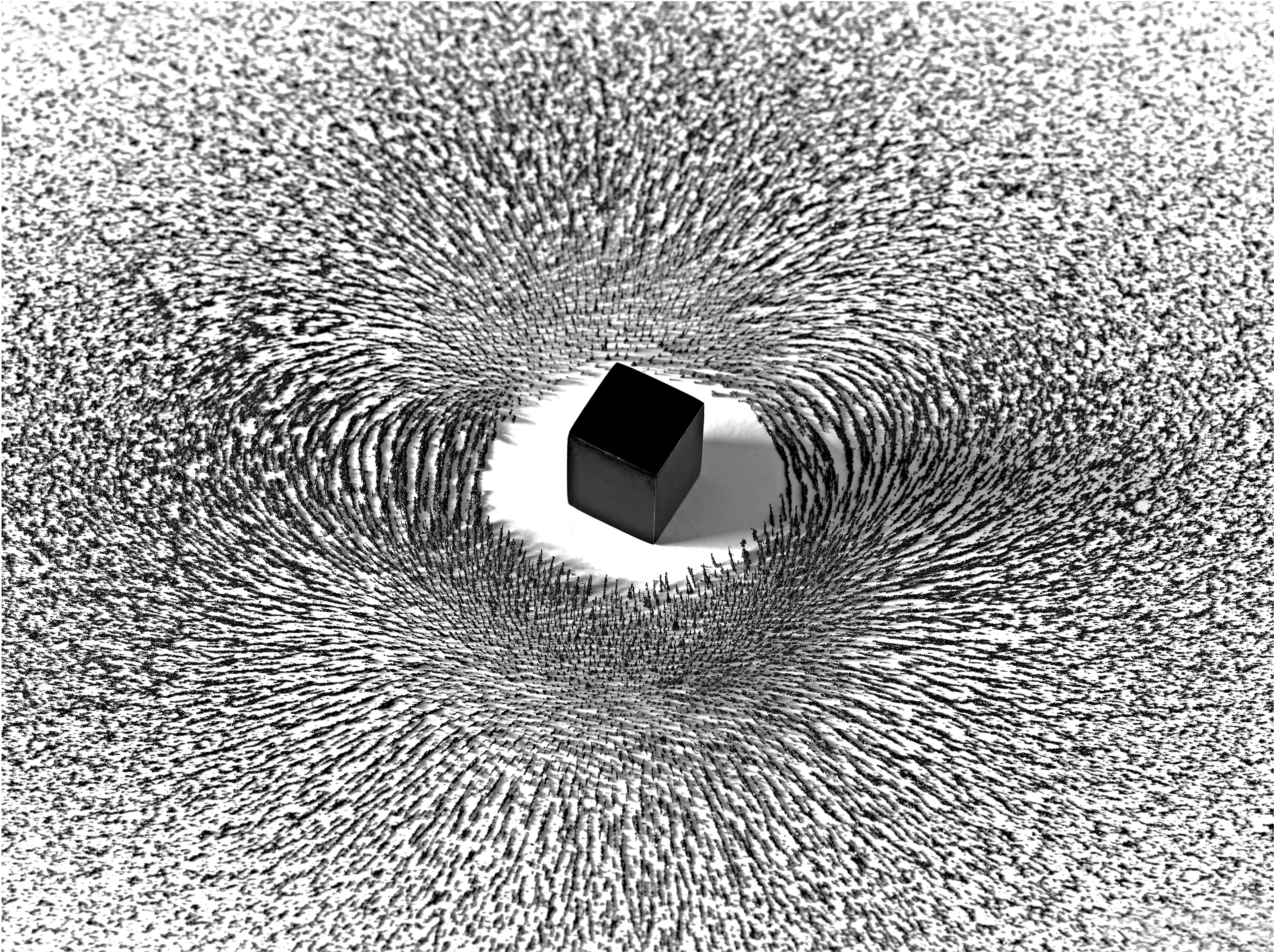
A black cube sits at the centre of a white field, iron filings drawn tightly around it in concentric formations. Saudi artist Ahmed Mater reference is immediate but also subtle. The cube stands in for the Holy Kaaba in Mecca, while the filings echo the circular movement of pilgrims performing tawaf, the ritual of rotating around the Holy Kaaba seven times in an anti-clockwise direction. By translating devotion into magnetic force, renders faith as a physical law, a ritual that connects those who take Pilgram to the very elements of physics and space. Belief is not illustrated through imagery or decorative elements but enacted, shown as something that pulls, orders, and binds bodies into a shared motion that expresses devotion and faith.
Khaled Ben Slimane Howa, 2015
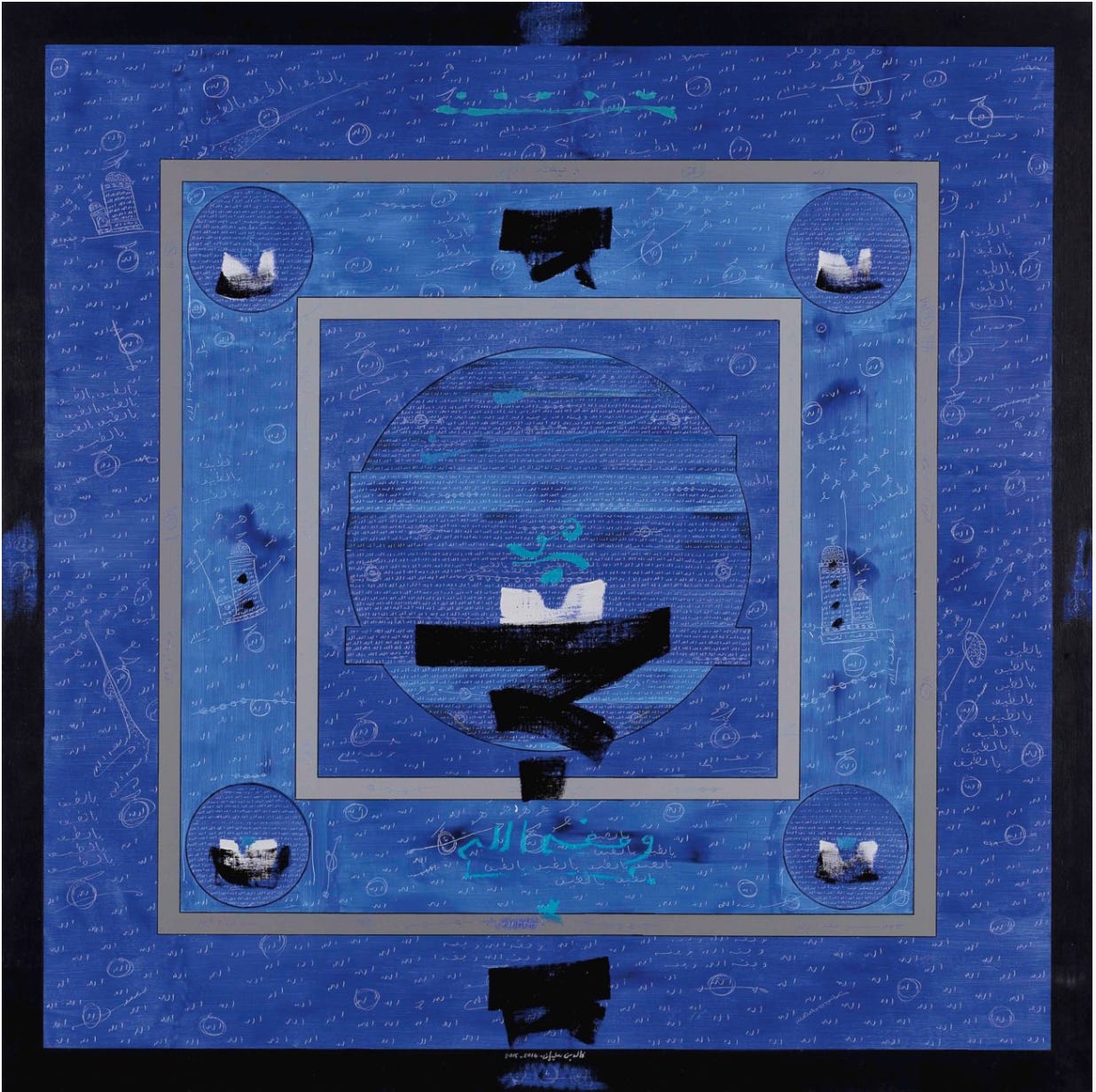
A field of saturated blue holds layered script, diagrams, and architectural forms within a carefully structured frame. At its centre, the word Howa, meaning “He,” refrencing to the divine. The composition feels both intimate and cosmic, as if mapping inner belief against celestial order. Tunisian artist, Khaled Ben Slimane’s work from his sculptures to paintings often moves between material and metaphysical space. Here, repetition and enclosure create a contemplative rhythm and the intense blue colour, often associated to spirituality in Islam, creates a sense of a meditation, presence, unity, and hinting at the unseen.